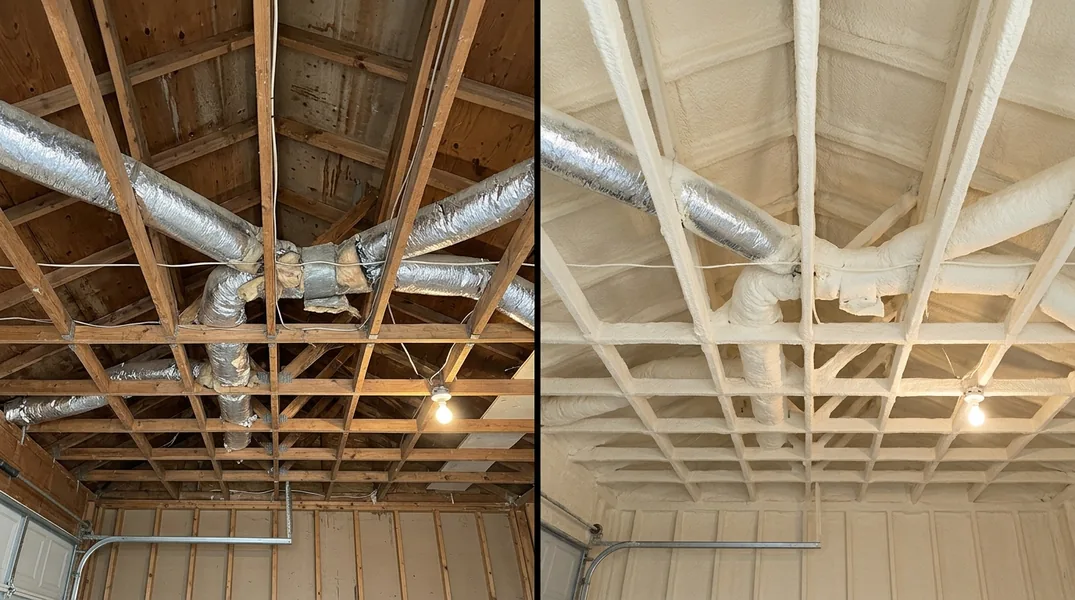
Understanding Southern Indiana's Demanding Climate
If you live in Bloomington or the surrounding areas of southern Indiana, you know that our weather doesn't play by gentle rules. Summer temperatures can soar into the low 90s, while winter can drop well below freezing. Spring and fall bring unpredictable swings that test the integrity of any building envelope. This climate volatility is exactly why choosing the right attic insulation matters so much for homeowners, especially those with metal buildings, barndominiums, or pole barns.
The challenge isn't just about comfort, though that's certainly important. Extreme temperature fluctuations cause building materials to expand and contract repeatedly throughout the year. Traditional fiberglass batts and blown-in cellulose can settle, compress, and develop gaps over time, especially when subjected to these thermal stresses. Metal buildings are particularly vulnerable because metal conducts heat and cold rapidly, transferring temperature changes directly into the interior space. Without proper insulation, your energy bills spike, your HVAC system works overtime, and moisture problems can develop inside walls and attics.
Why Metal Building Insulation Requires a Different Approach
Metal buildings, whether they're agricultural pole barns, modern barndominiums, or commercial structures, present unique insulation challenges that standard residential insulation simply cannot address effectively. Metal conducts temperature at an incredibly fast rate, which means that without a thermal break and air seal, your metal building becomes a giant heat exchanger. In summer, the metal roof and walls absorb solar radiation and transfer that heat directly into the interior. In winter, any interior warmth escapes through the metal framing.
Closed Cell Spray Foam Insulation is recognized as the best insulation for metal building applications because it adheres directly to the metal substrate, creating both an air barrier and a thermal barrier simultaneously. This adhesion is crucial. Unlike batts or rolls that simply sit between framing members, spray foam bonds to every surface, eliminating the air gaps where heat transfer occurs. The R-value of closed cell foam typically ranges from R-6 to R-7 per inch, which means you achieve superior insulation performance in a thinner application compared to traditional materials. For pole barn insulation and steel building insulation projects across Bloomington, this efficiency translates directly to better comfort and lower energy costs.
Attic Spray Foam Insulation Near Me: When to Call a Professional
Many homeowners in southern Indiana attempt to handle insulation upgrades themselves, but Attic Spray Foam Insulation installation is not a DIY project. Spray foam application requires specialized equipment, proper ventilation, protective gear, and extensive training to ensure the product is applied correctly and safely. The foam expands as it cures, and if applied incorrectly, it can create structural problems or fail to seal critical gaps. Professional installers understand how to work with the specific climate conditions in southern Indiana and can adjust application techniques based on temperature and humidity.
If you notice rising energy bills, temperature inconsistencies between rooms, or visible moisture problems in your attic, it's time to call a professional. These signs indicate that your current insulation isn't performing adequately against our region's weather extremes. A qualified spray foam contractor can assess your attic, identify problem areas, and recommend whether Closed Cell Spray Foam Insulation or Open Cell Spray Foam Insulation is best for your situation. Closed cell foam is typically preferred for attics in our climate because it provides superior moisture resistance and higher R-value density, but open cell foam may be appropriate in certain applications where vapor permeability is desired.
How Spray Foam Handles Summer Heat and Winter Cold
The real test of any insulation product is how it performs during the extreme seasons. During southern Indiana summers, an uninsulated or poorly insulated attic can reach temperatures exceeding 150 degrees Fahrenheit. This heat radiates downward into living spaces, forcing air conditioning systems to work continuously. Spray foam insulation creates a continuous thermal barrier that reflects and resists this heat transfer. Because the foam seals air leaks completely, it prevents hot attic air from infiltrating your home through gaps in the attic floor or around penetrations for plumbing and electrical.
Winter performance is equally important. When outdoor temperatures drop below freezing, warm air naturally rises and escapes through the attic if there are any gaps or weak spots in the insulation. This heat loss not only drives up heating bills but can also cause ice dams along roof edges as warm air melts snow on the roof, which then refreezes at the colder eaves. Spray foam insulation maintains consistent R-value performance even in cold conditions, and its air-sealing properties prevent the convective heat loss that occurs with traditional batts. Additionally, spray foam's moisture resistance means it won't absorb water from condensation that forms when warm, humid air contacts cold surfaces, a common problem in attics during temperature swings.
Barndominium and Pole Barn Insulation: Specialized Solutions
Barndominiums have become increasingly popular in rural southern Indiana communities, offering homeowners the space and character of a barn conversion combined with modern living amenities. However, these structures present insulation challenges that differ significantly from traditional residential construction. Pole barns and steel buildings often have large, open floor plans with high ceilings and extensive metal framing. Standard fiberglass insulation leaves numerous thermal bridges where the metal structure conducts heat directly, and the open spans make it difficult to achieve consistent coverage.
Spray foam insulation is ideal for barndominium insulation and pole barn insulation projects because it conforms to any shape and size, fills irregular cavities, and eliminates the thermal bridging problems inherent in metal building construction. Whether you're insulating the roof deck, sidewalls, or rim joists, spray foam creates a monolithic thermal envelope that performs consistently. The material's durability also means it won't settle, compress, or degrade over decades of exposure to southern Indiana's weather cycles. For those considering this upgrade, understanding the difference between Closed Cell Spray Foam Insulation and open cell options is important, as closed cell provides superior performance in metal building applications due to its higher R-value and moisture resistance.
Spray Foam Insulation Cost in Bloomington: What to Budget
When evaluating spray foam insulation for your attic, metal building, or barndominium, understanding the investment required is essential for planning. Spray foam typically costs more per square foot than traditional fiberglass batts or blown-in cellulose, but the superior performance, longevity, and energy savings often justify the higher upfront expense. Pricing varies based on several factors including the size of the area to be insulated, the type of foam selected (closed cell versus open cell), the complexity of the application, and current material costs. A professional assessment is the only way to get an accurate quote for your specific project.
Rather than viewing spray foam as an expense, consider it an investment in comfort, energy efficiency, and building durability. Homeowners throughout Bloomington who have upgraded to spray foam consistently report lower energy bills, improved temperature consistency, and elimination of moisture problems. Many also find that the improved comfort and reduced HVAC strain provide returns that offset the initial investment within several years. If you're ready to explore your options and understand the true cost for your property, contact Bloomington Spray Foam Insulation at (812) 318-1765 to schedule a free estimate. Our team will evaluate your specific situation and provide transparent pricing based on your project scope.
Looking for a professional spray foam insulation contractor in Bloomington? Bloomington Spray Foam Insulation responds fast for all your spray foam insulation needs.
Get a Free Quote