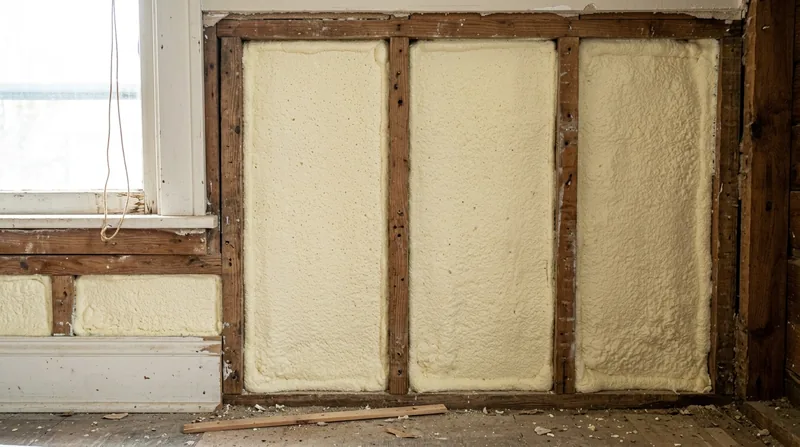




Open cell spray foam insulation in Bloomington fills the wall cavities and attic rafter bays of the city's century-old balloon-framed homes near Indiana University, as well as the mid-century brick ranches scattered across Monroe County. The mixed-humid climate here, hot, humid summers that drive moisture inward through walls and ceilings, then cold winters that reverse the flow, makes air sealing and controlled insulation a working necessity, not a luxury. Open cell foam expands to seal gaps that fiberglass and blown-in cellulose cannot reach, and it does the job at a lower material cost than closed cell alternatives. If your attic or wall cavity sits uninsulated or under-insulated, or if you have drafty balloon framing common in older Bloomington rentals, open cell delivers R-value and air sealing in a single application. We've been installing spray foam insulation across the region since 2014, and we know the specific failure modes that plague Bloomington's housing stock.
Why Open Cell Spray Foam Matters in Bloomington's Older Homes
Bloomington's rental stock near campus and the older neighborhoods in Prospect Hill were built with balloon framing, open rim joists, and thin or missing attic insulation. These homes leak air constantly. The hot, humid summers bake the attics above old ductwork, spiking cooling bills, while winter cold snaps expose drafty rim joists and inadequate crawl space insulation. Open cell foam seals these gaps fast and expands into the irregular cavities that plague pre-1960 construction.
- Open cell foam expands to fill balloon-frame cavities and gaps that fiberglass batts cannot seal.
- It reduces air infiltration in attics and walls, lowering both heating and cooling loads across seasonal swings.
- The material is less dense than closed cell, making it easier to handle in retrofit applications without over-pressurizing walls.
- Lower material cost per board foot makes it the practical choice for attic-only or wall-cavity top-ups on a budget.
For a detailed look at how Bloomington's climate and building stock shape insulation strategy, see our attic spray foam insulation page.
Key info: Bloomington's mixed-humid climate means moisture moves inward in summer and outward in winter. Open cell foam with proper air sealing handles both directions, and mechanical ventilation during cure prevents trapping moisture in the substrate. We specify R-value and thickness in every estimate, never a vague "full coverage" promise.
For more on how to verify any spray foam contractor's credentials and process, visit the Indiana state government site to confirm local building department contact and permitting requirements for your address.
How We Install Open Cell Spray Foam in Bloomington Attics and Walls
Open cell spray foam installation starts with a thorough site inspection to measure cavity depth, identify existing insulation, and check for moisture or active leaks. We never spray over a wet substrate, and if moisture is present, we walk away and refer the moisture source to the appropriate trade. Once the site is dry and prepped, we spray the foam in controlled passes, maintaining the correct ratio and drum temperature, and we use mechanical ventilation during the cure window to manage off-gassing.
- We inspect the attic or wall cavity for moisture, existing insulation, and structural condition before estimating.
- We protect HVAC ducts, electrical wiring, and any recessed lights with blocking or thermal barriers as required by code.
- We spray open cell foam in multiple thin passes to build to the specified thickness and R-value without over-pressurizing the cavity.
- We operate mechanical ventilation during cure and specify a re-entry window of twenty-four to forty-eight hours before occupancy.
- We trim excess foam flush with the rim or rafter and install any required ignition or thermal barrier per the local building code.
This controlled approach prevents the common mistakes of rig-and-run crews: no thickness spec, no ventilation during cure, and immediate re-entry promised.
Local example: A 1950s brick ranch in Mooresville with a flat attic and 2 inches of settled fiberglass typically needs 4 to 6 inches of open cell foam to reach R-20 or R-25 and seal the gaps around ductwork, rim joists, and the attic hatch. That job runs one day, includes mechanical ventilation during cure, and the homeowner can re-enter safely the next morning.
For a deeper dive into wall cavity and retrofit foam, see our wall and injection foam page.
| Approach | Description | Best for |
|---|---|---|
| Attic top-up with open cell | Spray 4 to 6 inches of open cell foam over existing fiberglass or cellulose to boost R-value and seal air leaks. | Mid-century brick ranches and 1970s homes with attics that have settled or compressed over decades. |
| Full attic replacement with open cell | Remove old insulation, inspect for moisture, spray 6 to 8 inches of open cell foam to rafter deck or to specified R-value. | Older homes with failed or contaminated insulation, or new construction where air sealing and R-value must happen together. |
| Open cell in wall cavities (retrofit) | Inject low-pressure open cell foam into closed wall cavities from outside or inside without demolition. | Balloon-frame homes near campus with uninsulated walls, and pre-1980 stick-built homes where retrofit avoids interior demo. |
| Sealed attic with open cell | Spray open cell to the rafter deck to create an unvented attic that controls moisture and temperature swings. | Homes with HVAC equipment, ductwork, or bonus rooms in the attic where conditioning the attic space makes sense. |
Open Cell Spray Foam Insulation Cost in Bloomington: What to Expect
Open cell spray foam typically starts at $0.55 per board foot in the Bloomington market, but the final cost depends on cavity depth, existing insulation, site access, and whether removal of old insulation is required. A straightforward attic top-up in a one-story home with easy access may run $800 to $1,500, while a full attic replacement with insulation removal in a two-story home with tight rafters can reach $2,500 to $4,000 or more. Wall cavity injection in a pre-1980 balloon-frame home typically costs between $1,200 and $2,500 depending on the square footage of wall and the number of injection points needed.
Factors that move the price up include limited attic access (crawling distance, hatch size, roof pitch), the need to remove and dispose of old insulation, moisture remediation or substrate prep, and distance from our Bloomington base. We provide a written estimate with R-value and thickness specifications so you know exactly what you are paying for. Getting two or three estimates from different contractors is always smart, and you should compare the R-value and thickness spec, not just the dollar total.
For a detailed pricing breakdown and service-specific ranges, visit our pricing page.
What to Look for When Hiring a Spray Foam Insulation Contractor Near Bloomington
Choosing a spray foam contractor is a bigger decision than picking a handyman for a gutter clean. The work involves chemical equipment, controlled application, proper ventilation, and code compliance. A bad installation can trap moisture, cause odor problems, or fail to seal air leaks. Here's how to vet any contractor, including us.
- Verify that the contractor is fully insured and can provide a current certificate of insurance naming your address as additional insured.
- Ask for a written estimate that includes R-value, thickness in inches, and board-foot total, never a vague "full coverage" price.
- Check references from at least two completed jobs in Bloomington or nearby Monroe County, and call them to ask about odor, re-entry timing, and follow-up.
- Confirm that the contractor understands local building code for your address, including ignition barriers, thermal barriers, and attic ventilation rules, and will help you navigate what applies.
- Ask about the cure process: mechanical ventilation during spray, re-entry window, and whether the installer will be reachable if questions arise after the job.
If you need help understanding what applies in your specific location, or if you want to discuss your project with someone who knows Bloomington's building stock, contact us for a free estimate. We respond within 24 hours at (812) 318-1765.
Open Cell Spray Foam Insulation in Bloomington: Pricing Guide
| Service | Price | Details |
|---|---|---|
| Attic top-up with open cell (4 to 6 inches) | Starting at $0.55/board ft | Cost depends on attic square footage, existing insulation depth, and ease of access to rafters and rim joists |
| Full attic replacement with insulation removal | Starting at $0.65/board ft | Includes removal and disposal of old insulation, substrate inspection, and spray to specified R-value and thickness |
| Wall cavity injection (retrofit, closed walls) | Starting at $1.50/linear foot | Price varies by wall height, cavity depth, and number of injection points needed to reach full coverage |
| Sealed attic or bonus room | Starting at $0.60/board ft | Spray to rafter deck to create unvented attic; cost includes thermal barrier and code-required blocking around penetrations |
| Travel and estimate | Included in Bloomington area | No mileage fee or travel charge within service area; free written estimate with R-value and thickness specification |
Indicative pricing, the exact cost depends on square footage, finish, and site access. Free personalized estimate within 24h at (812) 318-1765.


