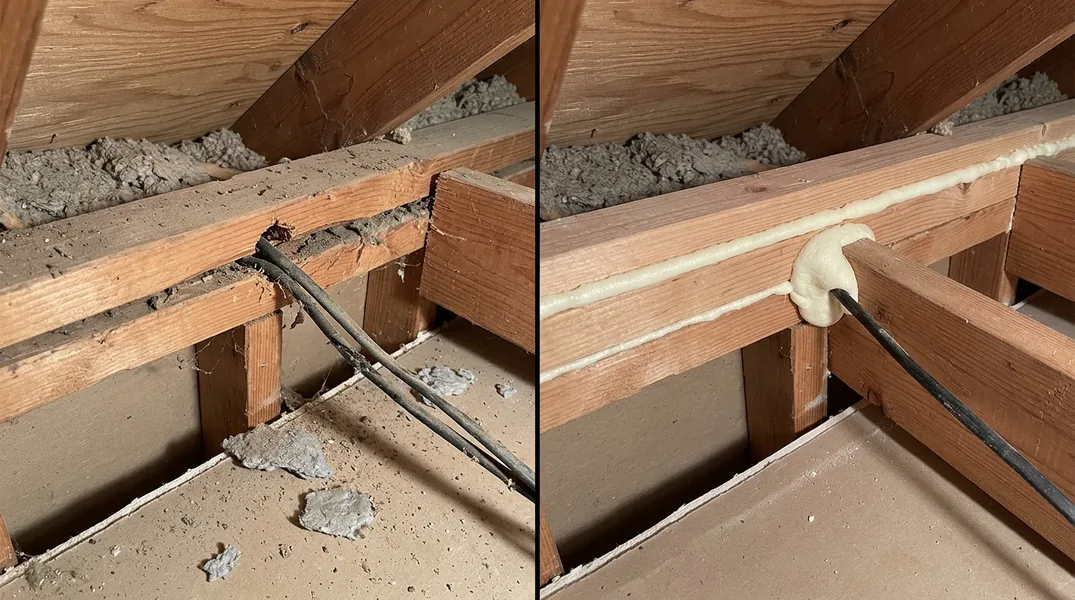
Understanding the Difference: Air Sealing vs. Spray Foam
When homeowners in Bloomington start thinking about improving their attic insulation, they often encounter two main strategies: air sealing and spray foam installation. While these approaches are sometimes presented as competing options, the truth is more nuanced. Air sealing focuses on closing gaps, cracks, and penetrations where conditioned air escapes. Spray foam, by contrast, provides both insulation and air sealing in a single application.
The key distinction lies in what each method accomplishes. Air sealing is a foundational step that addresses the movement of air through your home's envelope. Without proper air sealing, warm or cool air leaks out through unsealed ducts, electrical outlets, rim joists, and other openings. Attic Spray Foam Insulation, on the other hand, combines the air-sealing benefit with thermal resistance. This dual function makes spray foam particularly valuable for attics, where both heat loss and air infiltration are common problems. Understanding which approach (or combination of approaches) your home needs is the first step toward making an informed decision about your insulation upgrade.
Spray Foam Insulation R Value Per Inch: What the Numbers Mean
One of the most important metrics in insulation performance is the R-value, which measures thermal resistance. Closed Cell Spray Foam Insulation typically delivers between 6.0 and 7.0 R-value per inch, while Open Cell Spray Foam Insulation provides approximately 3.5 to 3.6 R-value per inch. This difference is significant. Closed cell foam's superior R-value per inch comes from its denser structure and lower permeability, making it ideal for attics where space is limited and maximum thermal performance is desired.
For homeowners comparing spray foam to traditional fiberglass batts (which offer roughly 3.2 to 3.8 R-value per inch), the spray foam advantage becomes clear when you factor in air sealing. A fiberglass batt installed with gaps or compression loses much of its rated R-value. Spray foam, by contrast, conforms perfectly to every cavity and crack, ensuring consistent performance. When you're planning an attic upgrade in Bloomington, understanding these R-values helps you determine how thick spray foam should be to meet your home's needs.
R Value Requirements by State: What Indiana Demands
Indiana's building code sets specific insulation requirements based on climate zone. Bloomington falls within a zone that typically requires R-38 to R-49 insulation in attics, depending on the specific building code edition and whether you're working on new construction or a retrofit. These R-value thresholds exist because Indiana experiences cold winters and warm summers, creating significant heating and cooling demands on homes.
For a homeowner using closed cell spray foam to achieve R-49 in an attic, you would need approximately 7 to 8 inches of material. With open cell foam, you'd need roughly 14 inches. These differences matter when space is constrained, such as in attics with low slope roofs or existing structural elements. Many homeowners in Bloomington find closed cell spray foam more practical because it achieves higher R-values in less space, though the pricing reflects the superior performance. Meeting or exceeding state requirements isn't just about comfort; it also qualifies you for potential energy efficiency incentives and tax credits.
How Thick Should Spray Foam Be: Calculating Your Home's Needs
The thickness of spray foam you need depends on three main factors: your target R-value, the type of foam you choose, and your attic's structural constraints. If Indiana's R-38 minimum is your goal and you're using closed cell spray foam with a 6.5 R-value per inch, you'll need roughly 6 inches of material. If you want the higher R-49 standard for superior energy performance, plan on 7.5 to 8 inches. These measurements are straightforward, but the installation itself requires professional expertise to ensure even coverage and proper curing.
Open cell foam offers a different calculation. Its lower R-value per inch means thicker applications are needed. A 14-inch layer of open cell foam achieves R-49, which may exceed the available space in many attics. This is why many homeowners and contractors in Bloomington prefer closed cell spray foam for attic work. Additionally, thickness affects performance in ways beyond R-value. Thicker applications provide better air sealing, greater moisture resistance (especially with closed cell foam), and improved structural support for attic decking. When you're unsure about the right thickness for your specific situation, reaching out for a free estimate allows a professional to assess your attic and recommend the optimal application.
Insulation Tax Credit and Rebates: Making Your Upgrade Affordable
One of the most overlooked benefits of upgrading your home's insulation is the potential for federal tax credits and state or local rebates. The federal Residential Energy Efficient Property Credit has historically offered homeowners a percentage back on qualifying insulation improvements, though specific percentages and eligibility requirements change with legislation. This means that investing in spray foam insulation can reduce your overall project cost significantly when you factor in tax benefits at the end of the year.
Beyond federal credits, many utility companies and local programs in Indiana offer rebates for energy efficiency upgrades. Some utilities provide direct rebates for attic insulation work, while others offer incentives through broader weatherization programs. The combination of federal tax credit and utility rebates can offset a meaningful portion of your spray foam installation pricing. Before starting your project, check with your local utility provider and review current federal tax guidelines to understand what incentives you might qualify for. When you contact Bloomington Spray Foam Insulation at (812) 318-1765 for your free estimate, our team can also discuss which incentives may apply to your specific situation.
When to Choose Air Sealing Alone vs. Full Spray Foam Installation
Not every home needs full spray foam installation. For some properties, strategic air sealing alone delivers sufficient energy savings at a lower cost. If your attic already has adequate insulation depth and your primary concern is air infiltration through specific gaps, ducts, and penetrations, air sealing might be the right first step. This approach works particularly well if your existing insulation is in good condition but has settled or developed gaps over time.
However, most older homes in Bloomington benefit from full spray foam installation because it addresses both insulation and air sealing simultaneously. If your attic insulation is below R-38, or if you have visible moisture issues, pest intrusions, or significant air leakage, spray foam delivers superior long-term performance. Wall & Injection Foam Insulation also serves homes where cavities in existing walls need retrofitting without major demolition. The best way to determine your home's actual needs is to have a professional energy audit or consultation. Call Bloomington Spray Foam Insulation at (812) 318-1765 to discuss your specific situation and get a tailored recommendation based on your home's condition and energy goals.
Looking for a professional spray foam insulation contractor in Bloomington? Bloomington Spray Foam Insulation responds fast for all your spray foam insulation needs.
Get a Free Quote